
The story of a painting - Green Air
Do you ever wonder how an artist reaches the finishing point? When I look at other artists' paintings, I always try to unpick how they've been created... which colour went down first, which sections have been reworked. Green Air, the largest painting in this new series, went through some very distinct stages and even if my pathway might not be obvious in the final iteration, I know that each stage played a major role in leading me to the endpoint. Below I share something of the process behind the making of this work. I hope you find it interesting. I've broken it down into five stages, which hopefully gives an insight into my process.
Green Air
The first marks and colours
I began by cutting a sheet of canvas into sections - I worked with what I had in the studio at this point without really considering the size the finished painting.
I started by applying diluted acrylic paint - it dripped, ran and stained the canvas. Using raw canvas (that just means it’s not primed) allows the paint to soak into and stain the fabric creating fluid, loose marks. I moved the sections around, at times working on the floor and then on the studio wall. I let them hang loosely, creating interesting folds and shadows.
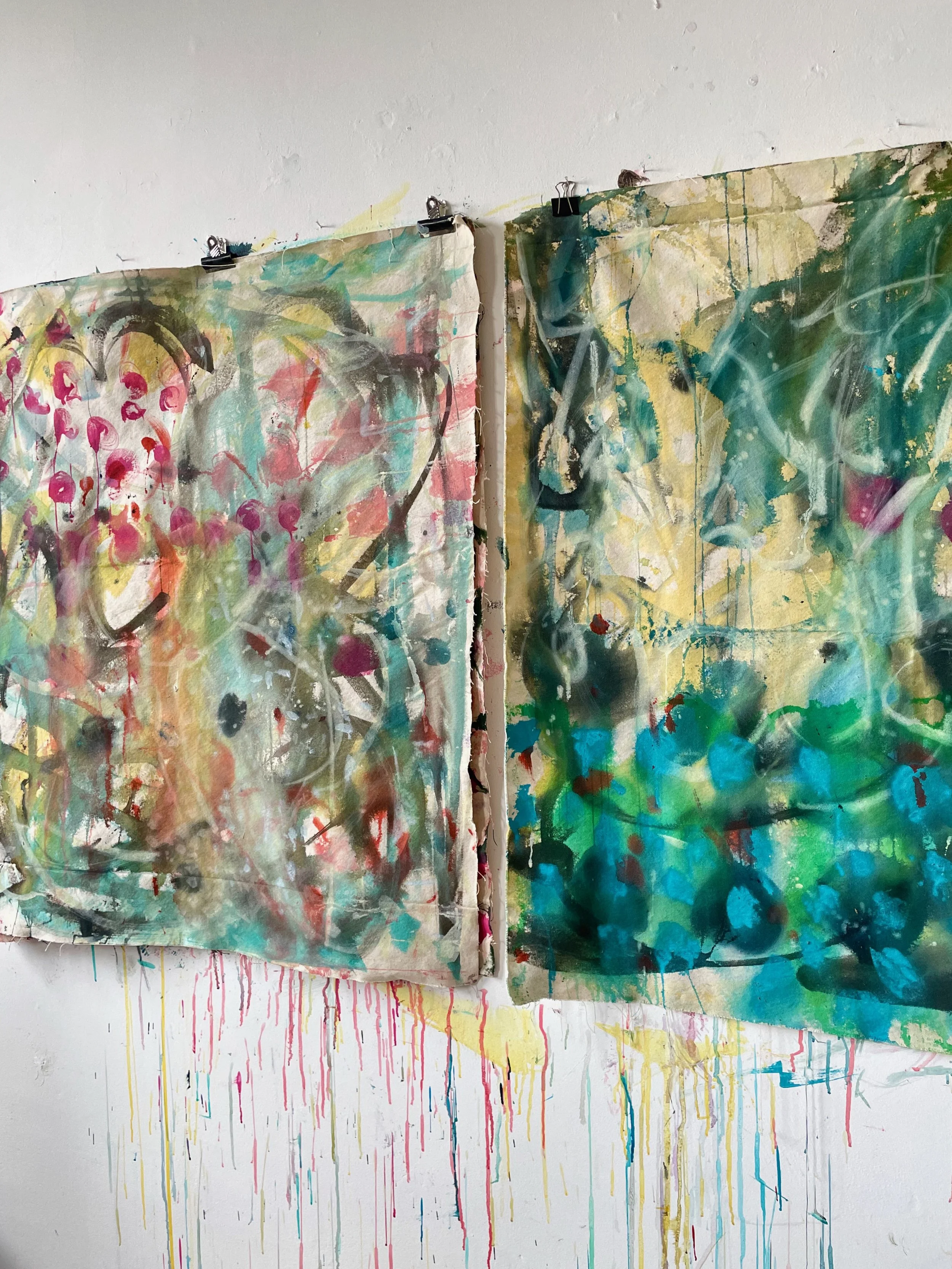
Working on sections of canvas
stage two of the painting
The next stage was deciding how to piece the canvas sections together. I lay them out on the floor, playing with the idea of creating a long rectangular painting, or a series of separate smaller paintings. In the end I decided to sew four squares together to create one large square painting.
After measuring the finished size, I built a stretcher to fit the painting. Once stretched the canvas takes on a different quality - it becomes solid, taut, and sharp edged.
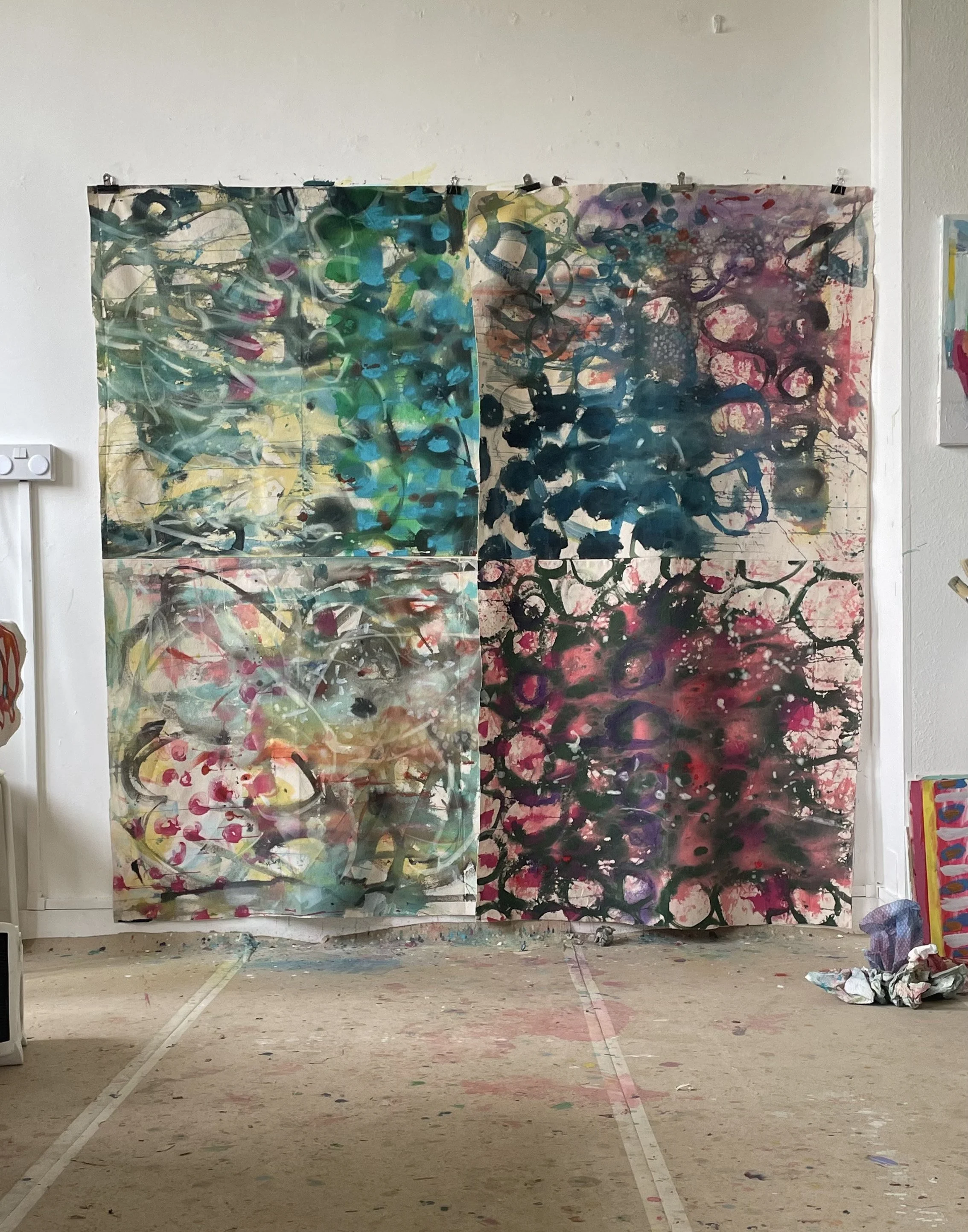
Sewing together the separate squares of canvas

The canvas is then stretched
stage three of the painting
To allow me to switch to oil paints, I prepared the canvas surface using a transparent primer. This created a non-absorbent surface while allowing the acrylic paint to remain visible. I really like the soft natural colour of the canvas as a surface to paint on as it adds warmth to the painting. Now the stretched and primed the canvas was on my studio wall and I began the second phase; painting in oils.
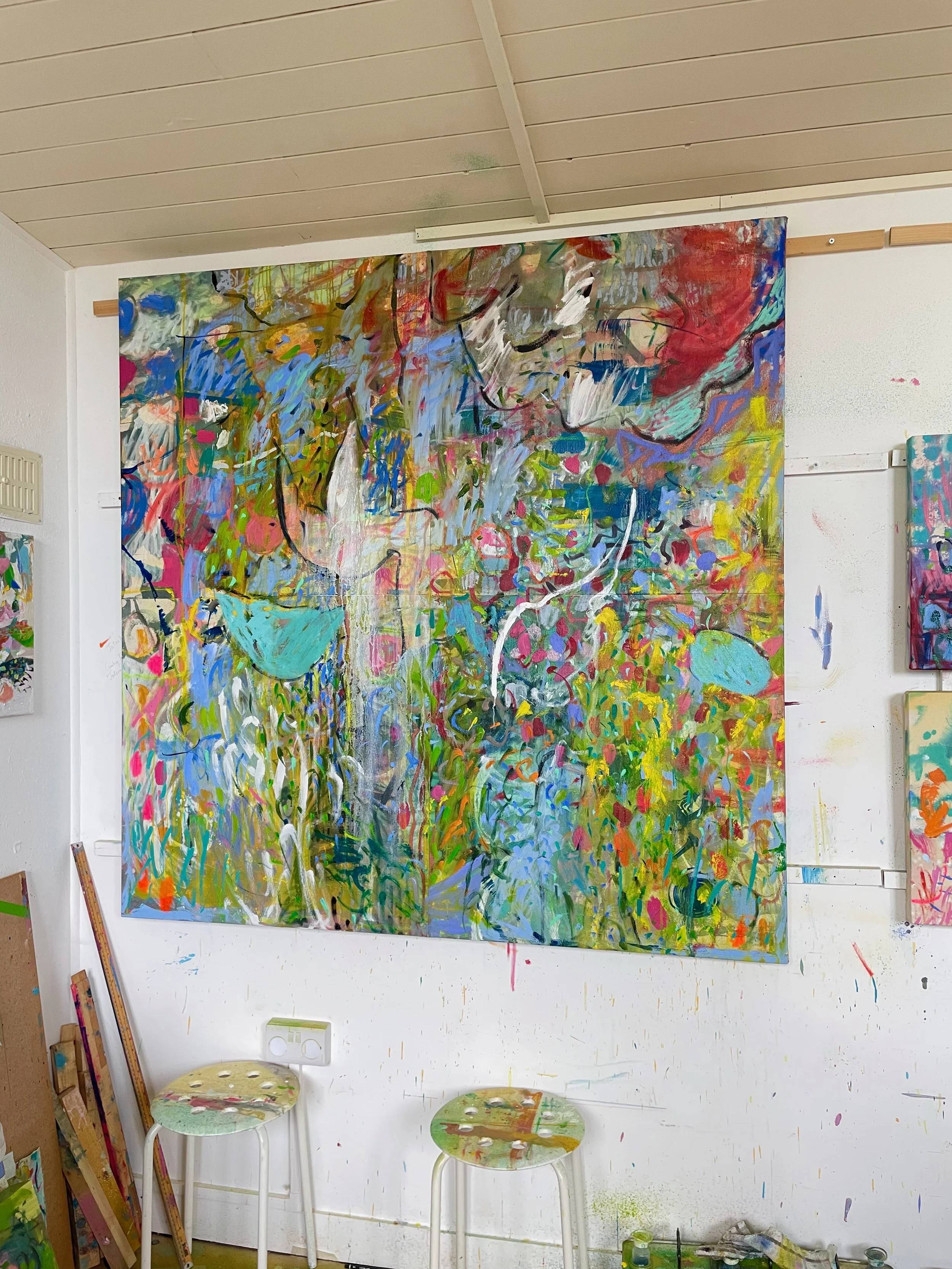
Working in oils over the abstract marks made in the earlier stages
stage four of the painting
I allowed the painting to develop intuitively - responding to the marks that were already there, emphasising some and editing out others. A loose composition began to gently emerge - I was thinking about land and air, and the feeling of being immersed in a landscape. I wanted the brush marks to be loose and agile. I imagined the painting as just a section of something much bigger.
I returned to this painting over several months, adding, editing and building layers of colour and marks. The sewn joints within the work became less visible, subtle lines that cross the canvas. To me they are like scars, slightly faded but still there. A deliberate imperfection.

The finished painting
stage five of the painting
What’s in a title? Titles can provide a way in, holding the door open for the viewer to enter the artists world. Personally, I like short titles - ones that give you a flavour of what I’ve been thinking about, but without telling you what to think…it’s a balance. Sometimes a title comes while I’m working and just seems to land in my lap. On other occasions It’s a real struggle to get the right phrase or word, it can feel harder than the actual painting process itself.
